Fell & Sell Guía de supervivencia en la mazmorra
La mazmorra cobra peaje. Vuelve con el saco.
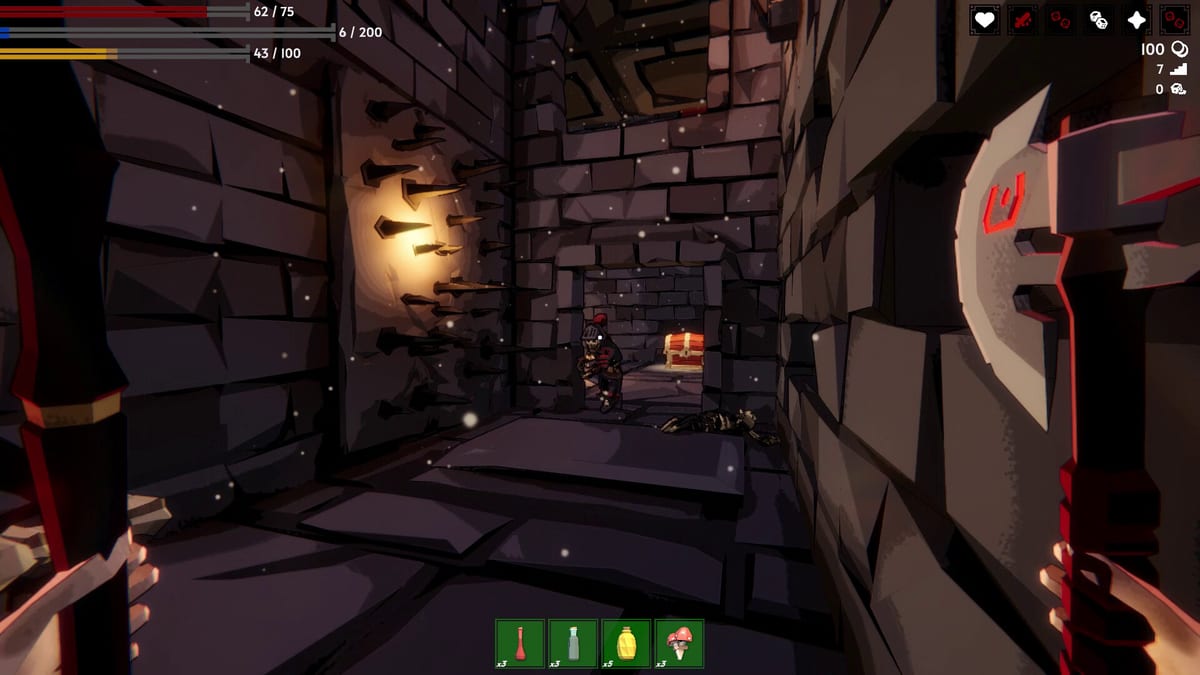
La mazmorra detrás de la tienda es donde se hacen y se pierden fortunas. Cada objeto de valor en tus estantes empezó como botín — y cada saco perdido empezó por una planta de más. Esta guía dice cómo volver vivo, proteger lo no depositado y juzgar cuándo irse.
La muerte
Si mueres, pierdes todo lo que llevas. No «casi todo». Todo. El saco no es tuyo hasta depositarlo en el banco, en la cabaña, gratis e inmediato.
Cada bajada tiene un presupuesto invisible: el valor que te puedes permitir perder. Cuando lo alcanzas, vuelves.
Plantas
La mazmorra baja planta a planta. Más abajo, enemigos más duros, botín más raro.
Planta 1 — tutorial, guerreros esqueleto. Límpiala mientras el equipo inicial aguante.
Planta 2 — amenazas a distancia. Hace falta un arma fiable y una armadura que exista. Con chatarra, es tu techo seguro.
Planta 3 — élites, riesgo real de muerte. Un arma decente, armadura, feeling de patrones. Empujón razonable para quien ya ha extraído.
Planta 4 y más — solo con plan de salida. El botín es excepcional; el riesgo también. Shallow, Overgrown y Darkest son una pila, no un solo pasillo beige: Biomas de la mazmorra, Jefes.
El banco
No hay penalización por depositar. La penalización es no hacerlo. Marco práctico: deposita si el saco dolería, si sangras, antes de una planta nunca vista. Algunos depositan en cada rellano; otros empujan dos o tres. Encuentra el equilibrio de tu caja, no el de un streamer.
Pelear o pasar
No todos los enemigos merecen un duelo. Grab-and-go es un run válido. Sala demasiado llena, pocas salidas: coge lo que quepa y vete. La mazmorra tendrá más botín mañana. Perfiles: Enemigos. Escudo, resistencia, doble arma: Combate.
Inventario
La capacidad es limitada. Cada recogida es un trueque: este objeto contra el espacio, contra el oro más adelante.
- Lo que vas a equipar — un set de recambio, no tres.
- Objetos pequeños de alto valor — anillos, componentes.
- Materiales crudos — solo si queda sitio.
Recogida automática el 27 de agosto de 2026, con el parche de mando. Menos caza de clics. No deposita. Tras el 1.0.2, cambiar a un arma más ligera con el saco lleno suelta el arma de más en vez de destruirla. Celdas que se quedaban cerradas tras limpiar: fallo de lanzamiento; el mismo post dice que las rejas se abren cuando la sala está vacía. Mando: Mando. Orden de campaña: Guía completa.
Huir
Huye herido y rodeado. Huye con el saco lleno de alto valor. Huye si la mezcla de enemigos rompe tu build. Huye si el estómago lo dice. Los mejores corredores no matan todo; saben cuándo andar.
Siguiente
Enemigos, Botín y rareza, Altares. Bosque en paralelo: Recolección en el bosque.
El mando del 27 de agosto no cambia esta regla: el saco no depositado sigue sin ser tuyo.
Preguntas frecuentes
Respuestas rápidas a las dudas más habituales.
¿Cuándo paro un run y deposito?
Cuando llevas más de lo que puedes perder, cuando estás herido, o antes de una planta nunca vista. Si morir ahora dolería: deposita.
¿Debo pelear a cada enemigo?
No. Pasa cuando el botín no vale el tiempo ni el riesgo. El objetivo es el beneficio, no el recuento de cadáveres.
¿Qué planta farmear al empezar?
La planta 1 es la más segura y la peor pagada. La 2 equilibra riesgo y oro con una primera mejora. Estabiliza la 2 antes de la 3.
¿Puedo recuperar el botín si muero?
No. La muerte borra todo el saco sin depositar. Por eso existe el banco: úsalo antes del drama, no después.